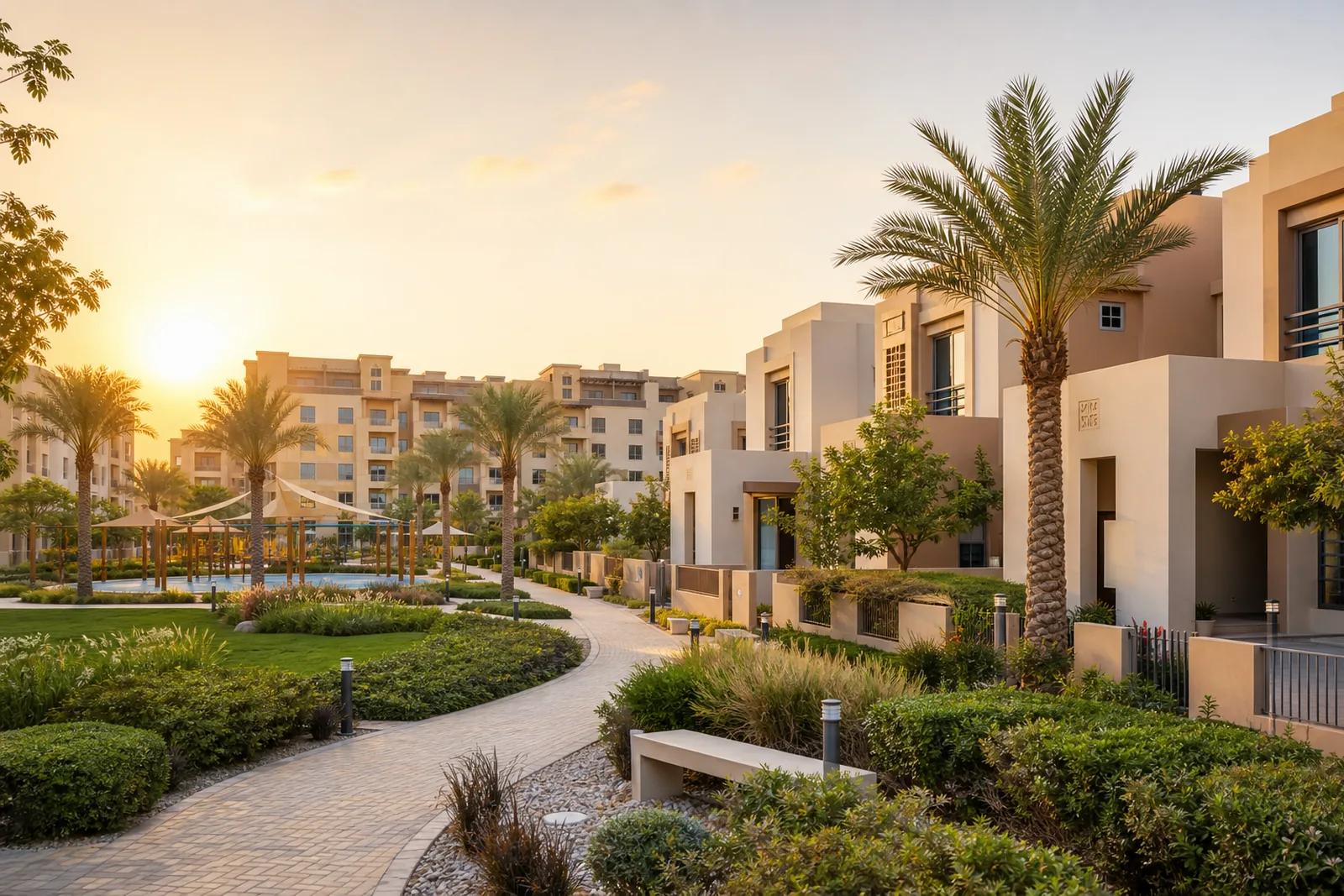
Al Reef – Area Summary
Al Reef is a gated residential community on Abu Dhabi’s mainland, close to Zayed International Airport, Yas Island and the E11 highway. Manazel Real Estate developed the neighborhood around two main sections. Al Reef Downtown carries the apartment stock, while Al Reef Villas spreads across four themed villages: Arabian, Desert, Mediterranean and Contemporary.
The address works best for people who want space without paying Yas Island or Al Raha Beach prices. It feels settled rather than unfinished. Supermarkets, nurseries, clinics, small restaurants, pools, gyms and play areas already operate inside the community. The drawback appears during the daily commute. Abu Dhabi city center is roughly 35 minutes away in ordinary traffic, and peak-hour queues can stretch the trip.
Key Features of Al Reef
- Gated community developed by Manazel Real Estate
- Apartments in Al Reef Downtown and family homes in Al Reef Villas
- Four villa designs: Arabian, Desert, Mediterranean and Contemporary
- Zayed International Airport is about 10 minutes away
- Yas Island can be reached in around 15 minutes
- Direct road access through the E11 corridor
- Shared swimming pools, gyms, gardens and children’s play areas
- Supermarkets, cafés, mosques, nurseries and medical services within the gates
- Freehold property open to buyers of different nationalities
- Bus 101 and A40 stops serve several parts of the neighborhood.
- Private parking comes with most apartments, townhouses and villas
- Lower asking prices than several newer Abu Dhabi residential districts
Al Reef’s current property, facility and transport profile supports these features.
Al Reef Location
Al Reef lies east of Abu Dhabi city, beside the E11 and near the routes leading to Yas Island, Khalifa City, Al Raha Beach and Dubai. Zayed International Airport is around 10 minutes away by car. Khalifa City takes about the same, while Yas Island generally falls within a 15-minute drive. Central Abu Dhabi is farther out, at roughly 35 minutes.
Dubai-bound drivers have a fairly direct run because the community opens onto the main inter-emirate road. Dubai is around 50 minutes in favorable traffic. That estimate can change sharply at school-run time, on Sunday mornings, or after a large event on Yas Island. Anyone planning a daily commute should test the route at the hour they would actually leave home.
Who Would Enjoy the Al Reef Area?
- Families With Young Children: Pools, shaded play areas, small parks and nursery choices make daily routines easier.
- Airport and Aviation Staff: The short drive to Zayed International Airport cuts a difficult commute down to a manageable one.
- Yas Island Employees: Hotel, retail, theme park and events staff can reach Yas without crossing central Abu Dhabi.
- First-Time Buyers: Apartments and smaller townhouses offer an entry point below many island developments.
- Households That Need More Bedrooms: Villa layouts run from two to five bedrooms, with gardens and dedicated parking.
- Dubai Commuters: E11 access helps people who travel towards Jebel Ali or the southern side of Dubai.
- Pet Owners: Walking paths, gardens and private outdoor areas suit households with dogs or cats, though building rules still need checking.
- Residents Who Prefer A Gated Setting: Security, reserved parking and shared facilities give the community a more contained feel.
The location, freehold status and range of housing types bring together families, professionals, tenants and first-time buyers.
Detailed Features of Al Reef
Daily life stays fairly local during the working week. Carrefour Market, Select Market and smaller shops handle groceries and quick errands. Al Reef Downtown has cafés, casual restaurants, salons and service outlets at street level, while the villa clusters use Downtown as their nearest retail centre.
The community has enough facilities for ordinary days, but bigger plans usually involve a drive. Residents go to Yas Island for entertainment, Deerfields Mall for a quieter shopping trip, and Khalifa City for wider school and medical choices. The roads inside Al Reef are easy to follow, although parking around popular retail rows can tighten in the evening.
Hotels in Al Reef
Al Reef does not have a large hotel district within its residential gates. Visitors usually stay near the airport or on Yas Island.
- W Abu Dhabi – Yas Island suits guests who want a full-service hotel near Yas Marina Circuit and the island’s attractions.
- Yas Plaza Hotels provides several hotel styles in one cluster, including family and long-stay choices.
- Airport-area hotels work better for short visits, overnight connections and relatives arriving on late flights.
For a guest spending most of the visit inside Al Reef, the airport side usually gives the shorter transfer. Yas Island is better when dining, theme parks or event access are also part of the trip.
Malls in Al Reef
- Yas Mall: Around 12 to 15 minutes away, with a large retail, dining and entertainment offer.
- Deerfields Mall: Roughly 14 minutes by car and useful for supermarket runs, family meals and everyday shopping.
- Al Raha Mall: A smaller option near Al Raha Beach, usually reached within 15 to 20 minutes depending on the starting gate.
- Al Reef Downtown Retail: The nearest choice for groceries, coffee, takeaway food, salons and routine services.
Yas Mall attracts the heaviest weekend traffic. Deerfields often feels easier for a short errand, especially when no one needs the theme parks or major fashion stores.
Parks in Al Reef
Al Reef has planted parks, green walkways, children’s play areas and shared pools spread across Downtown and the villa villages. Al Reef Park and Downtown Park give residents places for a short walk, a scooter ride with children, or an evening outdoors.
The villa communities also have smaller green pockets close to the homes. They are useful, though not all houses face one. A tenant choosing between two similar units should check the actual walk to the pool and park rather than relying on the community name alone.
Outdoor time works best from October through April. In hotter months, families usually use the pools, gyms and play areas early in the morning or after sunset.
Things To Do in Al Reef
- Walk through Downtown Park after dinner
- Use the shared pools and gyms inside the residential clusters
- Take children to Ferrari World Abu Dhabi or Warner Bros. World
- Spend a day at Yas Waterworld
- Shop, dine or watch a film at Yas Mall
- Visit Yas Beach for a paid beach day
- Try the cafés and casual restaurants in Al Reef Downtown
- Drive to Al Raha Beach for waterfront dining
- Visit Deerfields Mall when a smaller shopping trip will do
- Join community activities held around the parks and retail areas
The nearest large leisure attractions lie on Yas Island, while beaches and waterfront dining are available around Yas and Al Raha.
Accessibility and Transport in Al Reef
A private car remains the easiest way to live in Al Reef. The roads connect quickly to E11, and most homes include a reserved parking space. Villas and townhouses usually have parking inside the plot or directly outside, while apartment buildings provide basement or surface spaces.
Public transport has improved beyond the older description of Al Reef as a car-only district. It still requires planning. Abu Dhabi Mobility’s March 2026 timetables show Route 101 stopping at Downtown and the Arabian, Contemporary and Desert communities. Route A40 also passes through several Al Reef stops and connects the neighborhood with Zayed International Airport, Al Bahyah, Deerfields Mall and Al Shahama.
Taxis and app-based cars operate in the area. Waiting times can run longer late at night, during heavy rain, or after major Yas Island events.
Metro Stations in Al Reef
Al Reef has no operating metro station.
No confirmed rail opening date applies to the community as of July 2026. Buyers and tenants should treat any sales claim about a nearby future station as unconfirmed unless Abu Dhabi Mobility or another government body publishes the route, construction program, and opening date. Current area transport information lists buses, taxis and private vehicles as the available options.
Bus Stations in Al Reef
- Route 101 serves Downtown plus stops near the Arabian, Contemporary and Desert communities before continuing through Abu Dhabi.
- Route A40 links Al Reef with Zayed International Airport, Al Bahyah, Deerfields Mall and Al Shahama.
- Stops appear along Al Adaed Street and Yaw Khannour Street, with coverage varying by village.
- Timetables differ between weekdays and weekends.
The official schedules dated March 2026 show service across much of the day. Even so, a bus stop on the map does not guarantee a short door-to-door trip. Walking distance, summer heat and the number of changes should all be checked before signing a lease.
Key Landmarks Near Al Reef
- Zayed International Airport: Around 10 minutes by car
- Khalifa City: Roughly 10 minutes
- Yas Island: Around 15 minutes
- Yas Mall: Usually 12 to 15 minutes
- Ferrari World Abu Dhabi: About 15 minutes, traffic permitting
- Al Raha Beach: Around 15 to 20 minutes
- Deerfields Mall: Roughly 14 minutes
- Abu Dhabi City Centre: Around 35 minutes
- Dubai: About 50 minutes on a clear run
These are area-level estimates. Al Reef has several entrances, and the starting village can add a few minutes before the car reaches E11.
Education Near Al Reef
Early-years education is available inside the community, while older pupils usually travel to Khalifa City, Al Raha Gardens, Yas Island or nearby mainland districts. The choice includes British, Canadian, IB and other curricula, but the school run deserves a trial drive.
A campus that looks 12 minutes away at midday may take longer at 7:15 am. Bus availability also differs by school and residential cluster. Parents should confirm transport coverage directly with the admissions team before paying a deposit.
Nurseries in Al Reef
- Maple Bear Nursery: Located in Al Reef Downtown and accepts children from infancy through the early-years stages.
- Redwood Montessori Nursery: Another early-learning option serving families in and around the community.
- Several nurseries in Khalifa City and Al Raha also collect children from nearby residential areas.
Parents should ask about the daily schedule, meal policy, nap arrangements, outdoor time and transport. A nursery may be physically close yet inconvenient when its pickup route reaches a particular village late.
Primary and High Schools Near Al Reef
- Raha International School: Operates campuses in Al Raha Gardens and Khalifa City and follows the IB route.
- Canadian International School Abu Dhabi: Located in Khalifa City and teaches the Alberta curriculum from kindergarten to Grade 12.
- Ryan International School: A nearby option listed among the schools serving Al Reef families.
- Al Majd Charter School: Serves pupils from surrounding mainland communities.
- Schools on Yas Island add British and international choices for families prepared to drive farther.
Admission availability changes by year group. Families moving during the school year should check waiting lists first, then choose the house. Reversing that order can create a long school run.
Universities Near Al Reef
- Zayed University Abu Dhabi Campus: Located in Khalifa City, within a reasonable drive for students living in Al Reef.
- Abu Dhabi University: Its main Abu Dhabi campus operates in Khalifa City.
- Khalifa University: Further towards central Abu Dhabi, though still accessible for daily study by car.
University students without a car should study the full bus journey before moving. The direct road distance may look acceptable, but transfers can make the trip far longer.
Healthcare Facilities in Al Reef
Al Reef Medical Centre and Ibn Sina Medical Center cover routine consultations and everyday treatment close to home. Local pharmacies support repeat prescriptions and basic health needs. For emergency care, surgery or specialist departments, residents usually drive to Khalifa City or another larger hospital.
NMC Royal Hospital in Khalifa City provides 24-hour emergency care and a broad range of medical departments. Larger medical facilities such as NMC Royal Hospital and Mediclinic Khalifa City are about 15 to 20 minutes from Al Reef. Traffic near school zones can affect that trip.
Residents with regular specialist appointments should check the exact clinic location before choosing a unit. “Khalifa City” covers a large area, and two facilities carrying the same district name may have very different travel times from Al Reef.
Properties in Al Reef
Al Reef divides neatly into apartments and family houses. Al Reef Downtown contains studios and one- to three-bedroom flats, usually with balconies, fitted kitchens, shared gyms, pools and reserved parking. Al Reef Villas offers two- to five-bedroom townhouses and villas across the Arabian, Desert, Mediterranean and Contemporary villages.
The architectural label changes the outside appearance more than the basic purpose of the home. Plot position often affects daily life more. Single-row properties can offer better privacy, corner plots may have extra outdoor space, and homes near pools or retail areas can pick up more foot traffic.
As of July 2026, the average Al Reef sale listing is at about AED 1.65 million. Its current area data lists studios near AED 680,000, one-bedroom apartments around AED 878,000, two-bedroom units close to AED 1.26 million and three-bedroom apartments near AED 1.7 million. Villa asking prices average about AED 2.38 million, with three-bedroom homes around AED 2.16 million and five-bedroom villas near AED 3.13 million.
Rental asking prices vary widely by size and condition. The current Al Reef listings run from about AED 50,000 to AED 180,000 a year across the wider community. Al Reef Downtown listings average roughly AED 84,500, while villa listings average around AED 131,700. These are portal-asking figures, not completed transaction values.
Buyers should inspect cooling charges, service fees, maintenance history, waterproofing, garden condition and any alterations made by earlier owners. Tenants need to ask whether the landlord covers major air-conditioning repairs and whether the quoted rent includes access cards, parking remotes or maintenance contracts.
Future Plans for Al Reef Area
Al Reef is already a mature community, so future change is more likely to arrive through upkeep, retail turnover, transport adjustments and development in nearby districts than through a full rebuild of the original master plan.
No public opening date for a metro serving Al Reef appears in the current Abu Dhabi Mobility information reviewed. For now, the most concrete 2026 transport position comes from Routes 101 and A40, both covered by official March timetables. Regular commuters should still recheck the schedule before moving.
The nearby airport, Yas Island and E11 corridor may continue to influence housing demand and road use. That is an inference from Al Reef’s location rather than a confirmed development forecast. Buyers should ask about planned roadworks, nearby construction and community maintenance before committing.